PPF vs. Ceramic Coating: Which Does Your Vehicle Actually Need?
Two Different Types of Protection. One Important Decision for Your Vehicle.
If you’re looking to protect your vehicle’s paint, you’ve probably come across two options again and again: paint protection film (PPF) and ceramic coating.
Both are excellent ways to protect your vehicle, but they do very different jobs.
One of the biggest misconceptions we hear is that ceramic coating and PPF are interchangeable. They’re not. Ceramic coating isn’t going to stop a rock from chipping your hood, and PPF isn’t primarily designed to give you the slick, hydrophobic surface people love about a ceramic coating.
So which one does your vehicle actually need?
The answer depends on what you’re trying to protect against, how you drive your vehicle, how long you plan to keep it, and how much protection you want.
What Is Paint Protection Film (PPF)?
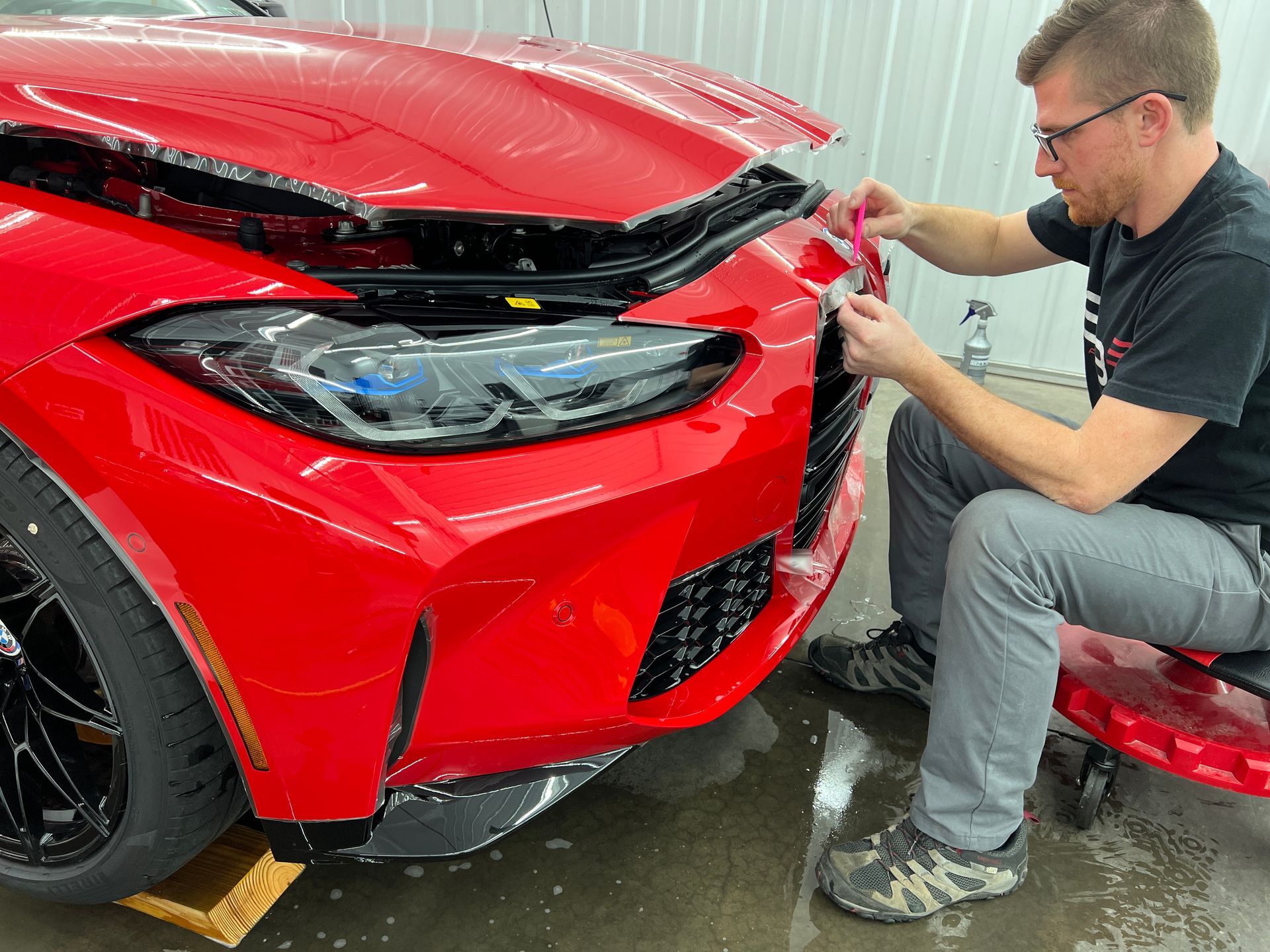
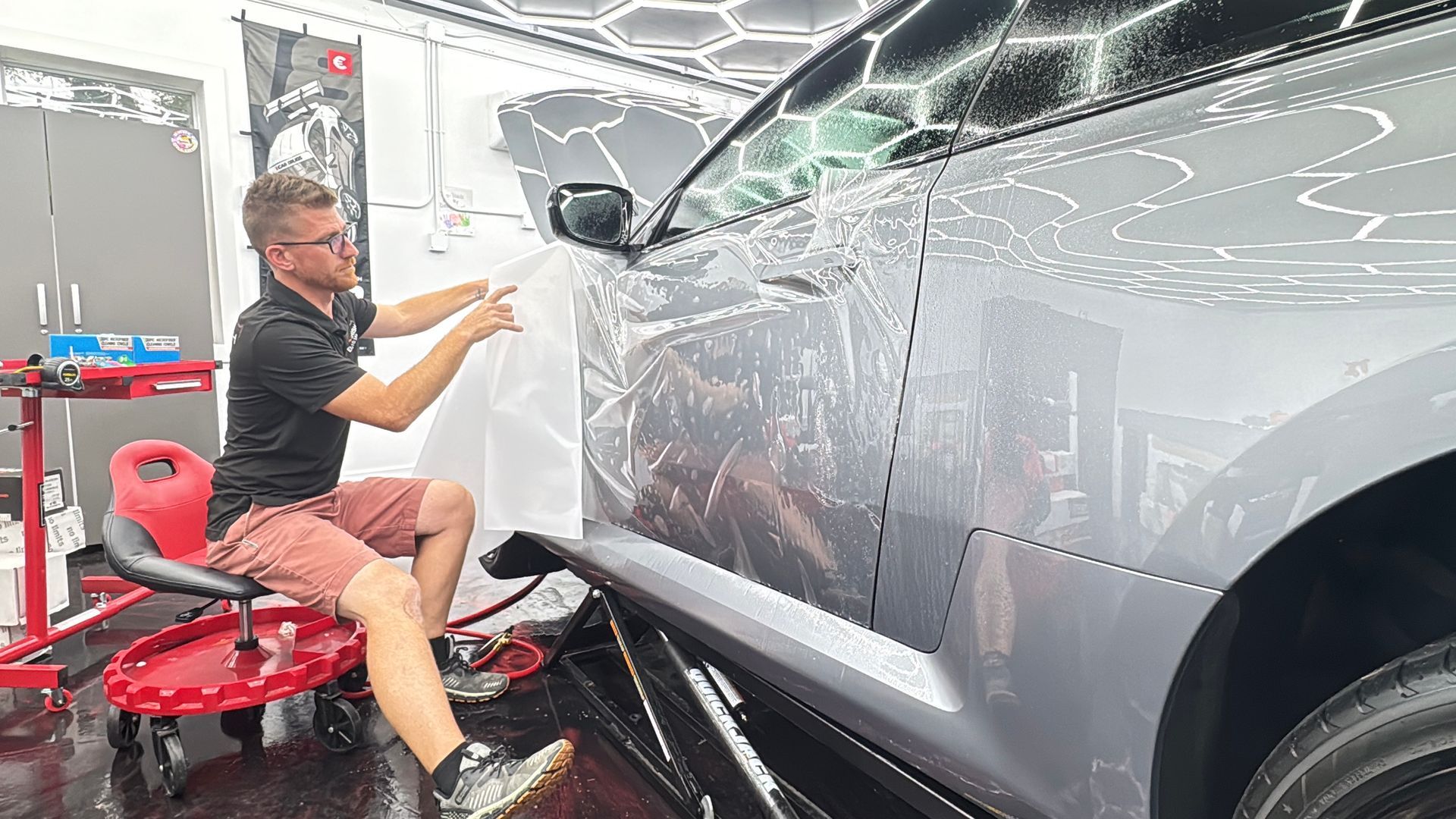
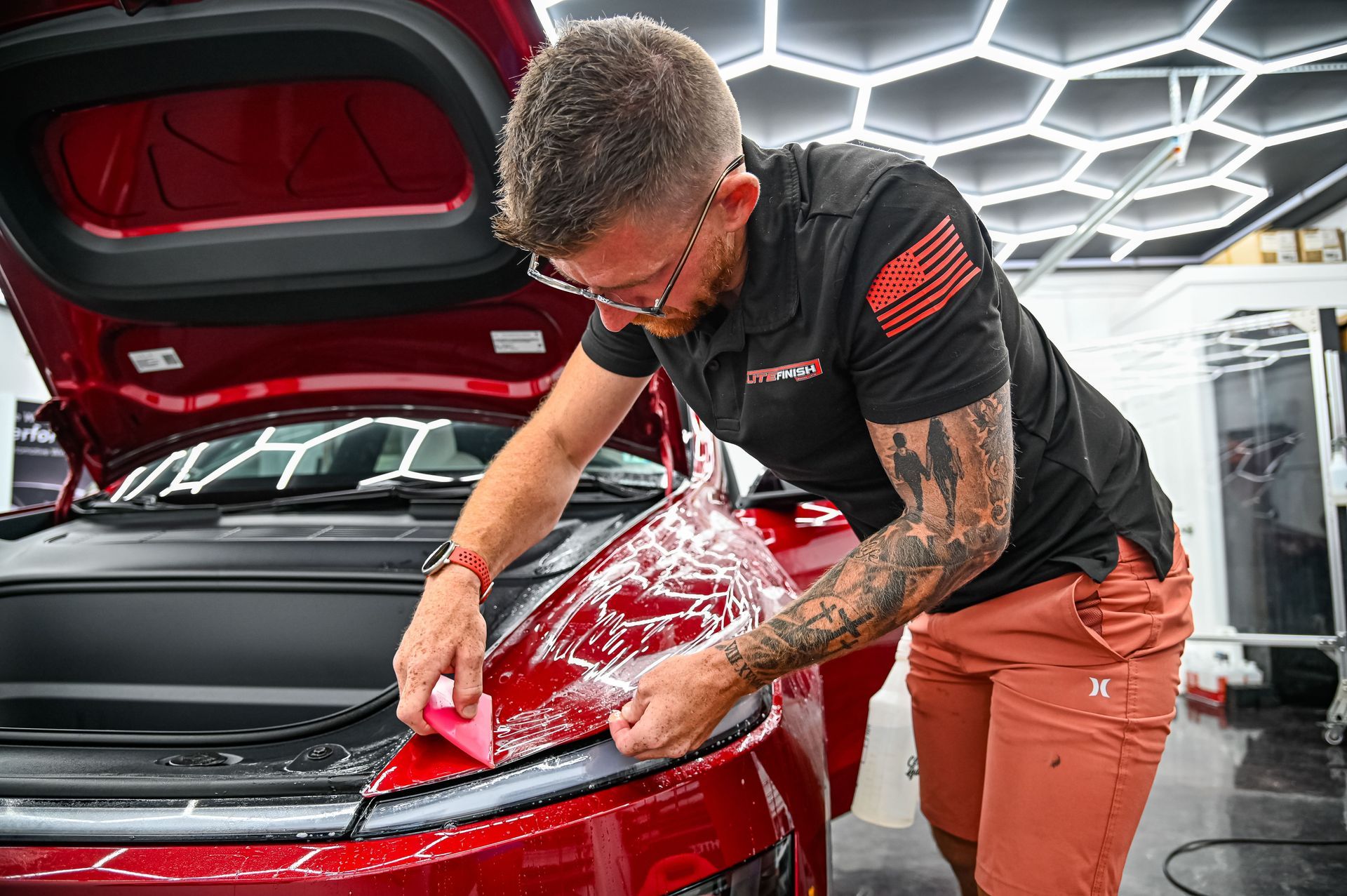
Paint protection film, commonly called PPF or clear bra, is a transparent urethane film installed directly over your vehicle’s painted surfaces.
Think of PPF as a physical barrier between your paint and the road.
It’s designed to protect against things like:
- Rock chips
- Road debris
- Minor scratches and scuffs
- Bug damage
- Road salt and contaminants
- Everyday wear in high-impact areas
Quality PPF also has self-healing properties. Light scratches and swirl marks in the film can disappear when exposed to heat.
At Elite Finish Auto Spa, we commonly install PPF on high-impact areas such as the front bumper, hood, fenders, mirrors, rocker panels, A-pillars and areas behind the wheels. Full-body PPF is also available for owners looking for maximum exterior protection.
What Does Ceramic Coating Do?
Ceramic coating is a liquid coating that chemically bonds to the surface of your vehicle.
Instead of adding a thick physical barrier like PPF, ceramic coating creates a highly hydrophobic, chemical-resistant protective layer.
Ceramic coating is ideal for protecting against:
- UV exposure
- Bird droppings
- Bug residue
- Road grime
- Environmental contaminants
- Chemical staining
- Oxidation
It also makes your vehicle significantly easier to clean and maintain while enhancing gloss and depth.
Water beads and rolls away more easily, dirt doesn’t stick to the surface as aggressively, and regular washing becomes much easier.
But there’s one thing ceramic coating isn’t designed to do:
Stop rock chips.
If a rock hits your hood at highway speed, ceramic coating doesn’t provide the physical impact protection necessary to prevent that damage.
That’s where PPF comes in.
PPF Vs. Ceramic Coating: The Biggest Difference
The easiest way to think about the two products is: PPF protects your paint from physical damage. Ceramic coating protects the surface and makes your vehicle easier to maintain.
| Paint Protection Film | Ceramic Coating | |
|---|---|---|
| Rock Chip Protection | Yes | No |
| Minor Scratch Prevention | Yes | Limited |
| Self-Healing | Yes | No |
| UV Protection | Yes | Yes |
| Chemical Resistance | Yes | Yes |
| Hydrophobic Properties | Some | Excellent |
| Easier Washing | Yes | Yes |
| Added Gloss | Yes | Excellent |
| Physical Barrier | Yes | No |
Neither product is automatically “better.” They’re designed to solve different problems.
When Does PPF Make the Most Sense?
PPF should be high on your list if physical damage is your biggest concern.
Consider PPF if you:
- Drive frequently on highways
- Have a long daily commute
- Regularly travel on roads with construction or loose debris
- Own a new or high-value vehicle
- Have a vehicle with expensive or difficult-to-match paint
- Want to prevent rock chips instead of repairing them later
- Plan on keeping your vehicle for several years
You also don’t necessarily need to wrap the entire vehicle.
For many daily drivers, a Full Front PPF package provides a great balance of protection and cost by covering the areas most likely to take abuse from the road.
That typically means protecting the bumper, full hood, full front fenders and mirrors.
For vehicles that see more aggressive driving or wider tires that throw debris against the body, additional protection on rocker panels and rear impact areas may make sense.
When Does Ceramic Coating Make the Most Sense?
Ceramic coating is often the better fit when your biggest priorities are appearance, easier maintenance and long-term surface protection.
It makes sense if you:
- Want your vehicle to stay glossy and easier to clean
- Hate constantly waxing or applying paint sealants
- Want protection from environmental contamination
- Have a garage-kept or lower-mileage vehicle
- Mostly drive locally
- Aren’t particularly concerned about rock chips
- Want long-term protection without covering the vehicle in film
A professionally installed ceramic coating can dramatically change what it’s like to maintain your vehicle.
It won’t make your vehicle maintenance-free, but it can make maintaining it much easier.
What If You Want Both?
This is actually one of our favorite combinations.
PPF and ceramic coating complement each other rather than compete with each other.
For example, let’s say you just purchased a brand-new SUV that you plan to keep for the next eight years.
You drive Route 30 every day and want to avoid a front bumper and hood covered in rock chips. But you also want the rest of the vehicle to stay glossy and easy to wash.
A great solution could be:
Full Front PPF + Ceramic Coating
- The PPF protects the high-impact areas from physical damage, while the ceramic coating protects the rest of the vehicle and makes the entire exterior easier to maintain.
- Ceramic coating can also be applied over the PPF, giving the film additional hydrophobic properties and making bugs, grime and road contaminants easier to remove.
You get the strengths of both products without necessarily paying to PPF the entire vehicle.
Do Brand-New Vehicles Need Protected?
One of the best times to protect a vehicle is when it’s new.
We regularly hear:
“I’m going to drive it for a while and then decide.”
The problem is that paint protection works best before the damage happens.
Once the front bumper and hood already have rock chips, PPF can prevent additional damage, but it can’t make the existing chips disappear.
The same applies to paint condition.
Even brand-new vehicles can arrive with light swirls, water spots, contamination or defects from transportation, dealership washing and time spent on the lot. That’s why we inspect and properly prepare the paint before installing protection.
The goal is to get the vehicle looking its best and then preserve that condition.
Do You Need Full-Body PPF?
Not necessarily.
Full-body PPF provides the highest level of physical paint protection, but that doesn’t mean it’s the right investment for every vehicle or every owner.
We look at factors like:
How much do you drive?
Someone driving 25,000 miles per year has different needs than someone driving 4,000.
Where do you drive?
Daily highway driving creates considerably more exposure to road debris than short local trips.
How long are you keeping the vehicle?
Protection becomes especially valuable when you’re trying to maintain a vehicle for many years.
What kind of vehicle is it?
A daily-driven family SUV, weekend sports car, collector vehicle and leased commuter don’t necessarily need the same protection strategy.
What bothers you most?
Some owners can’t stand rock chips. Others care much more about keeping their vehicle clean and glossy.
Those answers help determine whether you need ceramic coating, Full Front PPF, additional high-impact PPF coverage, full-body PPF or a combination.
What About Cost?
Ceramic coating generally requires a lower investment than PPF because the materials and installation processes are very different.
PPF installation involves precisely fitting and installing a physical urethane film over individual body panels. Full-body installations require significantly more material and labor than protecting only the front of the vehicle.
Rather than choosing based solely on price, we recommend thinking about what problem you’re trying to solve.
Spending money on ceramic coating when your biggest concern is rock chips won’t solve your problem.
Likewise, installing PPF when your only goal is easier washing may be more protection than you actually need.
PPF or Ceramic Coating: Which Should You Choose?
Here’s the simplest way we explain it:
If you’re worried about rock chips and physical damage → PPF.
If you’re worried about keeping the vehicle glossy, protected from environmental contaminants and easier to maintain → Ceramic Coating.
If you want both → Combine PPF and Ceramic Coating.
There isn’t one package we recommend for every vehicle.
And there shouldn’t be.
Not Sure What Protection Makes sense for Your Vehicle?
At Elite Finish Auto Spa in York, PA, we specialize in helping vehicle owners determine the right level of protection based on how they actually use their vehicle.
We’ll ask about your driving habits, mileage, how long you plan to own the vehicle and what you’re most concerned about protecting against before recommending a package.
Whether that ends up being ceramic coating, Full Front PPF, additional high-impact protection, full-body PPF or a combination, the goal is the same:
Protect the vehicle in a way that makes sense for you.
Have questions about your vehicle? Contact Elite Finish Auto Spa and tell us what you drive, how you use it and what you’re looking to protect against. We’ll help you determine which option makes the most sense.